Effective Management of Business Waste in East London
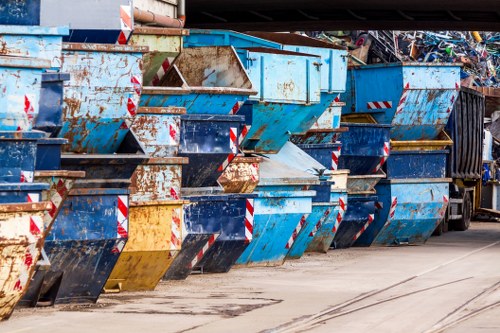
A row of large, industrial metal skips lined up outdoors on a paved surface, with some showing visible signs of rust and wear. The skips are predominantly blue with red and white striped reflective markings on their edges for visibility, and a few are painted in yellow or black. They are filled with various types of waste materials, not clearly visible but suggesting mixed rubbish. The background includes additional waste containers stacked or stored, indicating an operational waste management site in East London, with a concrete or asphalt ground surface and no visible vegetation. The scene appears to be daytime with diffuse natural lighting, emphasizing the utilitarian environment managed by Waste Clearance East London, specialising in rubbish removal services for local businesses in the area postcoded as E. The setting reflects a typical commercial or industrial waste collection and storage area, ready for collection or disposal.

In the bustling commercial hubs of East London, managing business waste efficiently is crucial for sustainability and regulatory compliance. With numerous industries operating in the area, from retail and hospitality to manufacturing and tech startups, the generation of waste is inevitable. However, how businesses handle their waste can significantly impact their environmental footprint, operational costs, and public image.

Proper waste management not only ensures that companies adhere to local regulations but also promotes a culture of responsibility and environmental stewardship. By implementing structured waste management strategies, businesses can minimize waste production, enhance recycling efforts, and contribute positively to the community.

This article explores the various aspects of business waste management in East London, offering insights into best practices, regulatory requirements, and innovative solutions to tackle waste-related challenges.
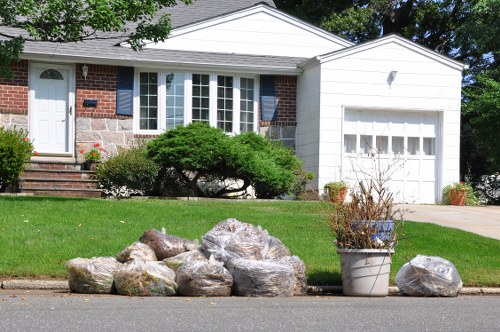
A residential front yard featuring a small, neatly maintained lawn with a low incline leading to a brick and white siding house. In the foreground, a collection of large, irregularly shaped plastic rubbish bags and stones are lined up along the curb, suggesting recent waste collection or disposal. A metal bucket containing dried, leafless branches and small plants is placed among the bags, indicating garden or yard waste. The house has a white garage door with square paneling on the right side and a white front door with a small window on the left, flanked by a large bay window with multiple panes. A small shrub with dense, green foliage is situated directly in front of the window, adding to the tidy appearance of the property. The scene is well-lit, with natural daylight illuminating the scene, and some trees and greenery are visible in the background, contributing to the overall impression of a suburban area within East London.

Understanding Business Waste in East London

Business waste encompasses all types of waste generated by commercial activities. In East London, this includes:

  • General Waste: Non-recyclable and non-hazardous waste such as office paper, food scraps, and packaging materials.
  • Recyclable Waste: Materials that can be reprocessed, including cardboard, glass, metals, and certain plastics.
  • Hazardous Waste: Waste that poses risks to health or the environment, including chemicals, batteries, and electronic waste.
  • Organic Waste: Biodegradable waste like food waste and garden waste.

Each category requires specific handling and disposal methods to ensure environmental safety and regulatory compliance. Understanding the types of waste generated helps businesses tailor their waste management strategies effectively.

East London's diverse business landscape means that waste profiles can vary significantly between sectors. For example, restaurants produce substantial organic waste, while manufacturing units may generate more hazardous materials.
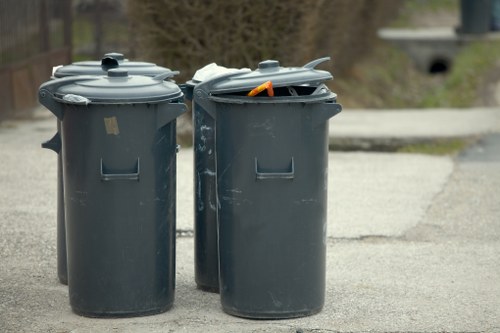
Two large, dark grey plastic wheelie bins with fitted lids are positioned on a paved driveway or street in an outdoor environment, likely in East London. The bin on the left has a closed lid, while the one on the right has its lid slightly open, revealing an orange-handled tool and some loose rubbish inside. The bins have a smooth, slightly glossy surface, typical of standard rubbish collection containers, with small rectangular indentations on the front for gripping. In the background, there are blurred natural elements such as trees and possibly a wall or fence, indicating a residential or urban area. The scene is lit by natural daylight, and the overall setting suggests routine waste disposal within the local area, consistent with services offered by Waste Clearance East London for general rubbish removal and waste management solutions in the region.

The Importance of Effective Waste Management

Effective waste management is vital for several reasons:

  • Regulatory Compliance: Adhering to local and national waste disposal regulations helps avoid legal penalties and fines.
  • Cost Savings: Efficient waste management can reduce disposal costs and optimize resource usage.
  • Environmental Protection: Proper disposal minimizes pollution and conserves natural resources.
  • Corporate Reputation: Demonstrating a commitment to sustainability can enhance a company's image and appeal to environmentally conscious consumers.

By prioritizing waste management, businesses in East London can achieve operational efficiencies while contributing to broader environmental goals.

Moreover, responsible waste management practices can lead to innovations in recycling and waste reduction, fostering a culture of continuous improvement and sustainability.

A light grey plastic rubbish bin filled with crumpled white paper and other discarded paper waste, situated on a blue and white checkered floor against a plain blue background. The crumpled paper objects have visible creases and varied textures, with some edges folded and overlapping. The bin appears to be a standard domestic or commercial waste container, with a smooth surface and slightly open top, showing the waste inside. The environment suggests an indoor space, possibly a kitchen or storage area in East London, where Waste Clearance East London provides rubbish removal services. The overall scene emphasizes the task of waste collection and the disposal of paper-based rubbish, aligning with the company's focus on effective waste management and clearance for local businesses and households. The lighting is even, without harsh shadows, highlighting the details of the wrinkled paper and the surface of the bin.

Regulatory Framework for Business Waste in East London

Businesses in East London must navigate a complex regulatory landscape governing waste management. Key regulations include:

  • Environmental Protection Act: Establishes guidelines for waste disposal to prevent environmental contamination.
  • Waste Electrical and Electronic Equipment (WEEE) Directive: Mandates the recycling of electronic waste.
  • Landfill Tax Regulations: Imposes taxes on waste disposed of in landfills to incentivize recycling and waste reduction.
  • Mandatory Recycling Targets: Sets specific recycling benchmarks that businesses must achieve.

Compliance with these regulations not only avoids legal repercussions but also positions businesses as responsible entities committed to environmental sustainability.

Additionally, staying informed about updates to regulations ensures that companies can swiftly adapt their waste management practices to remain compliant.
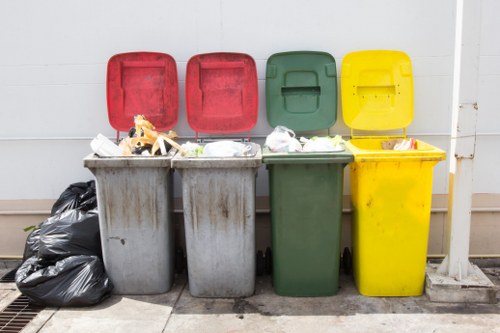
A row of four large wheelie bins positioned on a paved surface in front of a white wall, with each bin having a different coloured lid: red, red, green, and yellow. The grey bins in the foreground are filled with various types of waste, including cardboard, plastic bags, and other household refuse. Next to the bins on the left, there is a black plastic rubbish bag resting on the ground. The environment appears to be an outdoor waste collection area or designated rubbish disposal point, typical of urban or rural settings in East London. The detail shows the textured plastic surfaces of the bins, the slightly weathered look of the grey bins, and the clean, orderly arrangement on the pavement. The yellow bin, being bright in colour, stands out against the more muted tones of the grey and green containers. Waste Clearance East London manages such rubbish collection points, ensuring local waste disposal adheres to environmental and community standards, fitting within increased efforts for sustainable waste solutions in the area.

Best Practices for Business Waste Management

1. Conducting a Waste Audit

A comprehensive waste audit helps businesses identify the types and quantities of waste they generate. This information is crucial for developing targeted waste reduction strategies.

Steps to Conduct a Waste Audit:

  1. Identify and categorize waste streams.
  2. Measure the volume or weight of each waste category.
  3. Analyze the sources of waste generation.
  4. Develop strategies to reduce, reuse, and recycle waste.

2. Implementing Recycling Programs

Recycling programs can significantly reduce the amount of waste sent to landfills. Businesses should establish clear guidelines for recycling different materials and provide adequate facilities for employees.

Effective Recycling Strategies:
  • Provide separate bins for different recyclable materials.
  • Educate employees about proper recycling practices.
  • Partner with certified recycling companies to ensure proper material handling.
  • Monitor and report on recycling efforts to track progress.

3. Reducing Waste Production

Minimizing waste at the source is the most effective way to manage business waste. Strategies include:

  • Adopting paperless processes to reduce paper waste.
  • Optimizing inventory management to prevent overstocking and waste.
  • Implementing energy-efficient practices to reduce resource consumption.
  • Encouraging reusable products and packaging.

4. Proper Disposal of Hazardous Waste

Hazardous waste requires specialized handling to prevent environmental contamination and health risks. Businesses must:

  • Identify and classify hazardous materials.
  • Use designated containers for hazardous waste.
  • Partner with licensed waste disposal companies.
  • Train employees on safe handling and disposal procedures.

5. Partnering with Waste Management Professionals

Collaborating with experienced waste management providers ensures that businesses handle their waste efficiently and comply with regulations. Professionals can offer tailored solutions, including recycling programs, waste audits, and disposal services.

6. Monitoring and Continuous Improvement

Regularly reviewing waste management practices allows businesses to identify areas for improvement. Monitoring key metrics, such as waste generation rates and recycling percentages, helps track progress and implement necessary adjustments.

A row of large, industrial metal skips lined up outdoors on a paved surface, with some showing visible signs of rust and wear. The skips are predominantly blue with red and white striped reflective markings on their edges for visibility, and a few are painted in yellow or black. They are filled with various types of waste materials, not clearly visible but suggesting mixed rubbish. The background includes additional waste containers stacked or stored, indicating an operational waste management site in East London, with a concrete or asphalt ground surface and no visible vegetation. The scene appears to be daytime with diffuse natural lighting, emphasizing the utilitarian environment managed by Waste Clearance East London, specialising in rubbish removal services for local businesses in the area postcoded as E. The setting reflects a typical commercial or industrial waste collection and storage area, ready for collection or disposal.

Innovative Solutions for Business Waste in East London

East London businesses can leverage various innovative solutions to enhance their waste management efforts:

  • Waste-to-Energy Technologies: Converting waste materials into energy reduces landfill usage and generates renewable energy.
  • Composting: Organic waste can be composted to produce valuable soil amendments for agriculture and landscaping.
  • Digital Waste Tracking: Utilizing software to monitor waste generation and disposal can streamline waste management processes.
  • Circular Economy Initiatives: Adopting circular economy principles promotes the reuse and recycling of materials, minimizing waste production.

By embracing these solutions, businesses can not only improve their waste management practices but also contribute to a more sustainable and resilient economy in East London.

Moreover, innovation in waste management can open up new business opportunities, such as creating products from recycled materials or offering specialized recycling services.

A residential front yard featuring a small, neatly maintained lawn with a low incline leading to a brick and white siding house. In the foreground, a collection of large, irregularly shaped plastic rubbish bags and stones are lined up along the curb, suggesting recent waste collection or disposal. A metal bucket containing dried, leafless branches and small plants is placed among the bags, indicating garden or yard waste. The house has a white garage door with square paneling on the right side and a white front door with a small window on the left, flanked by a large bay window with multiple panes. A small shrub with dense, green foliage is situated directly in front of the window, adding to the tidy appearance of the property. The scene is well-lit, with natural daylight illuminating the scene, and some trees and greenery are visible in the background, contributing to the overall impression of a suburban area within East London.

Benefits of Sustainable Waste Management Practices

Sustainable waste management offers numerous benefits for businesses:

  • Cost Efficiency: Reducing waste leads to lower disposal costs and can increase operational efficiency.
  • Enhanced Brand Image: Demonstrating environmental responsibility builds trust and loyalty among customers and stakeholders.
  • Regulatory Advantage: Compliance with environmental regulations reduces the risk of fines and legal issues.
  • Employee Engagement: Sustainable practices can boost employee morale and attract talent who value environmental responsibility.

Furthermore, sustainable waste management can drive innovation and foster a culture of continuous improvement within organizations.

Adopting green practices positions businesses as leaders in sustainability, setting benchmarks for competitors and influencing industry standards.

Two large, dark grey plastic wheelie bins with fitted lids are positioned on a paved driveway or street in an outdoor environment, likely in East London. The bin on the left has a closed lid, while the one on the right has its lid slightly open, revealing an orange-handled tool and some loose rubbish inside. The bins have a smooth, slightly glossy surface, typical of standard rubbish collection containers, with small rectangular indentations on the front for gripping. In the background, there are blurred natural elements such as trees and possibly a wall or fence, indicating a residential or urban area. The scene is lit by natural daylight, and the overall setting suggests routine waste disposal within the local area, consistent with services offered by Waste Clearance East London for general rubbish removal and waste management solutions in the region.

Challenges in Business Waste Management

Despite the benefits, businesses often face challenges in managing waste effectively:

  • Cost Implications: Initial investments in waste management systems and technologies can be high.
  • Lack of Awareness: Employees may lack knowledge about proper waste segregation and recycling practices.
  • Regulatory Complexity: Navigating the myriad of waste management regulations can be daunting.
  • Limited Infrastructure: Availability of recycling facilities and waste processing centers may be inadequate.

Addressing these challenges requires a strategic approach, including comprehensive training programs, investment in technology, and collaboration with waste management experts.

Overcoming obstacles in waste management not only ensures compliance but also unlocks opportunities for cost savings and environmental stewardship.

A light grey plastic rubbish bin filled with crumpled white paper and other discarded paper waste, situated on a blue and white checkered floor against a plain blue background. The crumpled paper objects have visible creases and varied textures, with some edges folded and overlapping. The bin appears to be a standard domestic or commercial waste container, with a smooth surface and slightly open top, showing the waste inside. The environment suggests an indoor space, possibly a kitchen or storage area in East London, where Waste Clearance East London provides rubbish removal services. The overall scene emphasizes the task of waste collection and the disposal of paper-based rubbish, aligning with the company's focus on effective waste management and clearance for local businesses and households. The lighting is even, without harsh shadows, highlighting the details of the wrinkled paper and the surface of the bin.

Case Studies: Successful Waste Management in East London

Case Study 1: GreenTech Solutions

GreenTech Solutions, a tech startup in East London, implemented a comprehensive waste management program focusing on electronic waste recycling. By partnering with local recycling firms and educating employees on e-waste disposal, they reduced their electronic waste by 70% within a year.

Case Study 2: East London Café

The East London Café adopted zero-waste practices by eliminating single-use plastics, composting organic waste, and sourcing recyclable packaging materials. These initiatives not only minimized their environmental impact but also attracted environmentally conscious customers, increasing their patronage by 30%.

Case Study 3: Manufacturing Co.

A local manufacturing company streamlined their waste management by conducting regular waste audits and implementing waste-to-energy solutions. This approach reduced their landfill waste by 50% and generated renewable energy, lowering their operational costs.

A row of four large wheelie bins positioned on a paved surface in front of a white wall, with each bin having a different coloured lid: red, red, green, and yellow. The grey bins in the foreground are filled with various types of waste, including cardboard, plastic bags, and other household refuse. Next to the bins on the left, there is a black plastic rubbish bag resting on the ground. The environment appears to be an outdoor waste collection area or designated rubbish disposal point, typical of urban or rural settings in East London. The detail shows the textured plastic surfaces of the bins, the slightly weathered look of the grey bins, and the clean, orderly arrangement on the pavement. The yellow bin, being bright in colour, stands out against the more muted tones of the grey and green containers. Waste Clearance East London manages such rubbish collection points, ensuring local waste disposal adheres to environmental and community standards, fitting within increased efforts for sustainable waste solutions in the area.

The Future of Business Waste Management in East London

The future of business waste management in East London is poised for significant advancements driven by technological innovation and heightened environmental awareness. Emerging trends include:

  • Smart Waste Management Systems: Utilizing IoT devices and AI to optimize waste collection and processing.
  • Extended Producer Responsibility: Shifting the responsibility of waste management to producers, encouraging sustainable product design.
  • Increased Recycling Capabilities: Advancements in recycling technologies to handle a broader range of materials.
  • Collaborative Waste Management: Businesses partnering with each other and with municipalities to share resources and strategies for effective waste management.

By staying abreast of these trends, businesses can enhance their waste management practices, ensuring sustainability and compliance in an evolving regulatory landscape.

Proactive adaptation to future waste management practices will position East London businesses as leaders in sustainability, fostering a resilient and eco-friendly economic environment.

A row of large, industrial metal skips lined up outdoors on a paved surface, with some showing visible signs of rust and wear. The skips are predominantly blue with red and white striped reflective markings on their edges for visibility, and a few are painted in yellow or black. They are filled with various types of waste materials, not clearly visible but suggesting mixed rubbish. The background includes additional waste containers stacked or stored, indicating an operational waste management site in East London, with a concrete or asphalt ground surface and no visible vegetation. The scene appears to be daytime with diffuse natural lighting, emphasizing the utilitarian environment managed by Waste Clearance East London, specialising in rubbish removal services for local businesses in the area postcoded as E. The setting reflects a typical commercial or industrial waste collection and storage area, ready for collection or disposal.

Conclusion

Managing business waste in East London is a multifaceted endeavor that requires strategic planning, adherence to regulations, and a commitment to sustainability. By implementing best practices, leveraging innovative solutions, and overcoming inherent challenges, businesses can significantly reduce their environmental impact and enhance their operational efficiency.

The benefits of effective waste management extend beyond compliance, offering cost savings, improved corporate image, and a positive contribution to the community. As East London continues to grow as a commercial hub, the importance of sustainable waste management practices will only increase, necessitating ongoing efforts and collaboration among businesses, regulators, and waste management professionals.

Contact us today to learn how your business can implement effective waste management strategies and contribute to a greener East London.

Frequently Asked Questions

Our trusted business waste removal services utilize state-of-the-art equipment and proven methods to ensure efficient and safe disposal. From industrial-grade compactors to specialized recycling machinery, we handle all types of business waste with expertise. Contact our team for a quick quote and experience our reliable service.

Yes, we are accredited by leading industry organizations, ensuring our business waste services meet the highest standards. Our certifications reflect our commitment to excellence and regulatory compliance. Trust our experienced team for all your waste management needs. Contact us today for more information.

Absolutely. We hold all required certifications and comprehensive insurance to guarantee our business waste services comply with legal standards. Our commitment to legal compliance ensures peace of mind for your business. Reach out to our licensed team for a safe and compliant waste management solution.

We prioritize environmental responsibility by achieving a high recycling rate, diverting significant amounts of waste from landfills. Our sustainable practices include sorting, recycling, and repurposing materials whenever possible. Partner with us to enhance your business’s eco-friendly initiatives. Contact our team to learn more.

Our business waste removal service stands out with over 20 years of experience, licensed operations, and a proven track record of reliable, affordable solutions. We tailor our services to your specific needs, ensuring safety and transparency in every step. Trust us to handle your business waste efficiently. Contact our team for a quick quote.

Yes, we offer flexible and affordable pricing tailored to small businesses. Our transparent rates ensure you receive top-quality waste management without breaking your budget. We strive to provide cost-effective solutions that meet your needs. Reach out to our friendly team for a customized quote today.

Safety is our top priority. We follow strict protocols and use specialized equipment to handle and dispose of business waste safely. Our trained professionals are committed to minimizing risks and ensuring a secure waste management process. Choose our reliable services for a safe and efficient experience. Contact us for more details.

Absolutely. We offer flexible scheduling options to accommodate your business’s unique requirements. Whether you need regular pickups or one-time services, our adaptable approach ensures your waste management fits seamlessly into your operations. Contact our team to arrange a convenient pickup time.

We handle a wide range of business waste, including office waste, industrial scraps, electronic waste, hazardous materials, and recyclables. Our comprehensive services are designed to manage all your waste types responsibly and efficiently. Trust our experienced team for all your business waste needs. Get in touch for a tailored solution.

Yes, we offer prompt and reliable emergency business waste removal services. Whether you’re facing unexpected waste accumulation or need immediate assistance, our team is ready to respond quickly and effectively. Depend on our trusted services for urgent waste management solutions. Contact us anytime for support.

We maintain complete transparency with clear pricing, detailed service agreements, and regular updates on your waste management process. Our honest communication builds trust and ensures you understand every aspect of our services. Choose our reliable team for transparent and trustworthy business waste solutions. Reach out today.

Yes, our business waste services are available in multiple locations to serve you better. Simply provide your location, and we’ll ensure prompt and efficient waste management tailored to your area. Trust our local expertise for the best business waste removal. Contact our team to confirm availability in your region.
Waste Clearance East London

Explore effective strategies for managing business waste in East London, covering best practices, regulatory compliance, and innovative solutions to promote sustainability and operational efficiency.

Book Your Service Now

Get In Touch With Us.

Please fill out the form below to send us an email and we will get back to you as soon as possible.